Yarm · Stockton-on-Tees · Middlesbrough · Teesside
Roofing In Yarm,Stockton-on-Tees& Across Teesside
A new roof that ends the leaks, the patch-ups and the annual worry: fitted to a written fixed price, photographed before and after, and finished with the drive swept clean.
10/10 from 50 Checkatrade reviews · 4.91/5 from 99 TrustATrader reviews · £1,000,000 public liability · family run
10/10 on Checkatrade
From 50 verified reviews
4.91/5 on TrustATrader
From 99 reviews since 2020
£1,000,000 public liability
Details available before we start
Guaranteed workmanship
Terms vary by job and materials
Before and after photographs
You see the work without a ladder
The service explained
Roofing in plain English
Everything below is specific to this work on Teesside housing stock, no filler. If you would rather just talk it through, ring Terry on 07919 512218.
What a re-roof actually involves
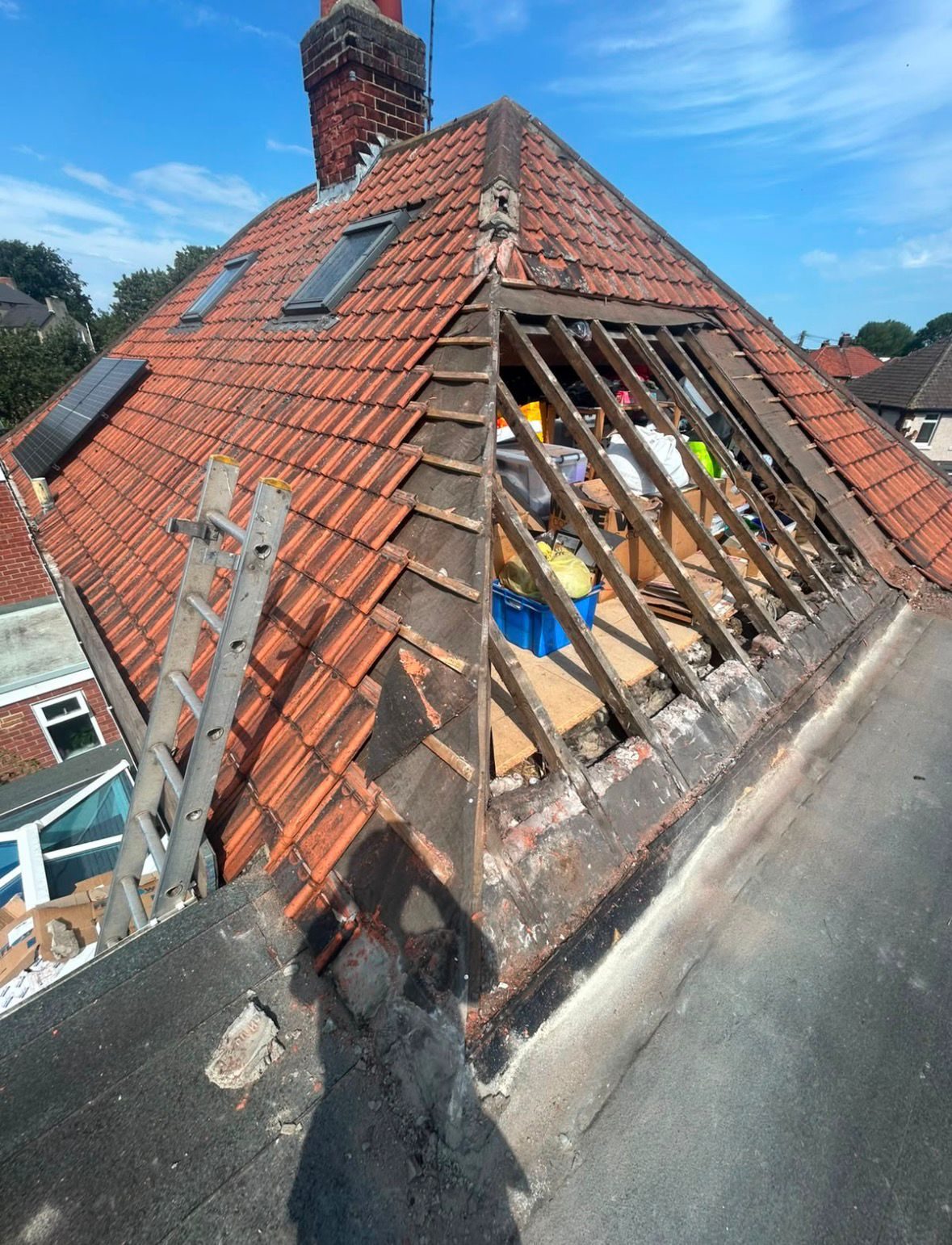
Roofing covers the whole weatherproof covering on top of your house: the tiles or slates, the battens they hang from, the breathable membrane behind them, the ridge and verge details that hold the edges down, and the flashings where the roof meets a chimney or a wall. A full re-roof strips all of that back and rebuilds it in the correct order, so the roof works as one system rather than a patchwork of repairs.
We fit new pitched roofs, complete re-roofs on tired houses, and flat roofs to extensions, bays, garages and dormers. On pitched work that means stripping the old covering, checking every rafter and batten, laying new breathable membrane, re-battening, then setting the new tiles or slates with mechanically fixed dry ridge and dry verge instead of mortar wherever the roof allows.
Who it is for
Homeowners in Yarm, Eaglescliffe, Ingleby Barwick and Stockton-on-Tees whose original 1950s–1980s concrete tile roofs are reaching the end of their working life; owners of older slated terraces in Middlesbrough and Darlington where nail fatigue has started; landlords who want the roof taken off the maintenance list for a couple of decades; and anyone who has had three or four repairs in as many years and is tired of paying twice.
It is also for buyers and sellers. A survey that flags "roof covering at the end of its serviceable life" stalls sales. A documented re-roof with before and after photographs answers the surveyor's point directly.
When it is needed
When repairs stop holding: tiles slipping in more than one place, mortar bedding crumbling along the ridge and verge, daylight or damp staining visible in the loft, sagging lines along the roof slope, or delamination and flaking on old concrete tiles. On flat roofs it is felt that has blistered, split or ponded water.
Teesside weather forces the issue. Wind driving off the North Sea lifts loose tiles, and repeated freeze-thaw cycles break down mortar and porous tiles faster than most homeowners expect. A roof that looked acceptable in August can shed tiles in the first serious February gale.
Why it pays to have a roofer do it
Roof coverings only work as a complete system. Fixing centres, batten gauge, membrane laps, ventilation at eaves and ridge, and correctly dressed lead all depend on each other; get one wrong and the water finds it. A roof laid with the right gauge and the right fixings sheds water and resists wind uplift for decades. One laid by eye does not.
It is also height work over your own house. We are fully insured with £1,000,000 public liability, we scaffold and access the work properly, and we photograph what we find before we cover it up, so you can see the state of the timbers and membrane rather than take our word for it.
What happens if it waits
The cost of leaving it another winter
A failing roof does not stay a roof problem. Water that gets past the covering moves into timber, plaster and insulation, and the bill grows every season it is left.
Rot in the roof structure
Persistent damp on rafters, purlins and wall plates turns a covering job into a carpentry job. Replacing structural timber costs far more than replacing tiles and membrane.
Ruined ceilings and insulation
Wet loft insulation stops insulating and stays wet. Ceilings stain, then blow. Redecoration and new insulation get added to a bill that started as a roof.
Tiles coming off in a gale
Mortar-bedded ridges and verges that have already cracked are the first things to go in a storm. A tile off a two-storey roof is a genuine hazard to cars and people below.
Common mistakes we get called out to fix
- Paying for a fifth patch repair on a covering that has reached the end of its life; four repairs usually cost more than doing it once, properly.
- Re-bedding a ridge in mortar on an exposed roof, then watching it crack again within a few winters, instead of moving to a mechanically fixed dry ridge system.
- Re-tiling over old battens and no membrane, which locks a known weakness under a brand new covering.
- Skipping eaves and ridge ventilation, then getting condensation in the loft and blaming the new roof.
- Accepting a verbal price with no written scope, so the extras arrive after the scaffold is up.
How the job runs
Our roofing process, step by step
- 01
Inspection
We come out at no charge, get up to the roof and into the loft where access allows, and look at the covering, battens, membrane, ridge, verge, flashings and timbers.
- 02
Diagnosis and written quote
You get a clear written price setting out exactly what is being stripped, what is being fitted and what happens to the old material. Free, with no obligation and no pressure to decide on the spot.
- 03
Access and strip
Access is set up safely, the old covering is stripped in controlled sections, and everything that comes off is bagged or skipped rather than dropped in your garden.
- 04
Rebuild of the roof system
New breathable membrane, new treated battens at the correct gauge, tiles or slates set and fixed to suit the exposure, dry ridge and dry verge where the roof allows, and lead flashings dressed properly.
- 05
Verification and photographs
We check the finished covering, the flashings and the rainwater path, then photograph the roof so you can see the finished detail from ground level.
- 06
Completion and guarantee
The site is cleared and swept, you get the before and after photographs, and the workmanship is guaranteed; terms vary depending on the job and the materials used.
What you get out of it
The difference it makes to the house
Decades, not seasons
A correctly rebuilt covering on new membrane and battens is a long-term fix, not another patch that buys you a year.
No more emergency call-outs
The repeat cost of chasing leaks after every storm stops, which is where most of the real saving sits.
Wind resistance built in
Mechanically fixed ridge and verge systems hold the vulnerable edges down without relying on mortar that cracks.
A dry, usable loft
Membrane and correct ventilation keep insulation dry and effective, so the heat you pay for stays in the house.
Evidence for surveys and sales
Photographs and a documented scope answer the exact question a homebuyer's surveyor asks about roof condition.
You can see the work
Before and after photographs of every job, the most repeated point in our Checkatrade and TrustATrader reviews.
Detail, materials and methods
Roofing: the technical detail
Coverings we fit
The right covering depends on the pitch, the exposure, the existing structure's load capacity and the look of the street. We will tell you what suits the roof rather than what suits the van.
- Concrete interlocking tiles: the workhorse covering on most post-war Teesside estates; fast to lay, hard wearing, cost-effective on a like-for-like re-roof.
- Plain tiles: double-lap clay or concrete for period and detailed roofs, including hips, valleys and bonnet details.
- Natural and fibre cement slate: for older terraces and properties where the original slated appearance matters.
- Lightweight coverings where the existing structure cannot carry heavier concrete tiles.
- Flat roofing: rubber (EPDM) single-ply membranes and torch-on felt systems for extensions, garages, dormers and bay roofs.
What sits under the tiles
Most roofs that fail early fail underneath. Old bitumen sarking felt tears at the eaves and stops draining; battens split at the nail line; and 1960s roofs often have no membrane at all.
We fit breathable membrane so any moisture that gets through can dry outward instead of sitting on the timber, re-batten with treated timber at the gauge the chosen tile needs, and set eaves and ridge ventilation so the loft void breathes. That combination is what turns a covering into a roof.
Edges, ridges and abutments
Nearly every leak we get called to starts at a junction rather than in the middle of a slope. Ridges, verges, valleys, chimneys and wall abutments are where the detailing has to be right.
Where the roof allows we replace mortar bedding with mechanically fixed dry ridge and dry verge systems, and we use correctly sized code lead, dressed and wedged into raked joints, at chimneys, dormers and abutments; see our dry verge and dry ridge and lead work pages for the detail on each.
Pitched, flat and mixed roofs
Many Teesside houses are a mix: a main pitched roof, a flat or shallow bay roof at the front, a flat extension roof at the back, and a garage roof beside it. Each needs a different system, and the transitions between them are where water tends to get in.
We quote the whole roof rather than the easy part of it, and we will tell you plainly if the bay or the extension has years left and does not need doing at the same time.
Domestic and light commercial
Most of our roofing is domestic: houses, bungalows, terraces, extensions and garages. We also carry out light commercial work such as small units, shop roofs and outbuildings where the covering is a conventional pitched or flat system.
For anything commercial, access, working hours and how the building stays usable during the work all get set out in the written quote before we start.
Where we work
We roof across Yarm, Eaglescliffe, Ingleby Barwick, Thornaby, Stockton-on-Tees, Middlesbrough, Darlington, Northallerton and the wider North Yorkshire area. Being local matters on roofing: we know the estates, the common tile types and the exposure that comes with each area.
Straight answers
Roofing questions we get asked
- How much does a new roof cost in Stockton-on-Tees or Yarm?
- It depends on the size and pitch of the roof, the covering you choose, access, and whether battens, membrane or timber need replacing. That is why we come out and look before quoting; you get a written fixed price for the agreed scope, free of charge, before anything is committed.
- Do you charge for a quote?
- No. We come out, look at the roof properly and give you a written quote at no cost, so you know the price before any work starts.
- How long does a re-roof take?
- A typical semi-detached or terraced re-roof is measured in days rather than weeks; larger or more detailed roofs with hips, valleys and chimney work take longer. We give you the expected duration in the written quote and tell you if weather moves it.
- Will I have to move out or clear the loft?
- No need to move out. It is worth moving anything precious out from directly under the roof void and covering stored items, because stripping a roof creates dust. We will tell you at the quote stage if anything else needs shifting.
- How long should a new roof last?
- A correctly rebuilt tiled roof on new membrane and battens is a long-term covering measured in decades rather than years. We will not put a single number on your specific roof without seeing it, because pitch, exposure and material all change the answer.
- Is the work guaranteed?
- Yes, we guarantee our workmanship, with terms varying depending on the job and the materials used. Ask us for the terms that apply to your project and we will set them out.
- Are you insured?
- Yes, we hold £1,000,000 public liability insurance and we are happy to provide details before work begins.
- Can you do emergency work if my roof is leaking now?
- Ring us on the number at the top of this page. We are contactable seven days a week, 9am to 5pm, and urgent leaks are the calls we prioritise; one of our TrustATrader reviews is from exactly that situation.
- Do I need scaffolding?
- Any full strip and re-roof needs proper access for safety. That is included and priced in your written quote, so there is no surprise access charge later.
- Can you just repair it instead?
- Often, yes, and we will say so. If the covering has life left in it, a repair is the honest answer and we will quote for that instead. See our roof repair page for what that involves.
Related work we carry out
- Roof RepairLeaks, slipped tiles, storm damage and bay roofs diagnosed properly and fixed once, with photo evidence.
- Dry Verge & Dry RidgeMechanically fixed verge and ridge systems that replace failing mortar: no more slipped tiles in high winds.
- Gutters, Soffits & FasciasReplacement guttering and boards that clear water fast and stop overflow staining your brickwork.
- Lead Work & FlashingCorrectly dressed code lead to abutments, valleys, dormers and chimneys: the detail most leaks start at.
See all our roofing and roofline services or head back to the T&T Rooflines homepage.
Where we do this work
- Yarm
- Stockton-on-Tees
- Middlesbrough
- Eaglescliffe
- Ingleby Barwick
- Thornaby
- Darlington
- Northallerton
- North Yorkshire
We work monday to sunday, 9am – 5pm. Ring 07919 512218 or use the contact form and we'll arrange a free look at the roof.
Speak to Terry today
Get a written price for your roof, free, and with no pressure
We come out, get up to the roof, photograph what we find and give you a clear written quote. Ring Terry or send the details and we will arrange a look.